Medium- to Long-term Targets
Environmental Management Promotion Process
The Company has established the NEC Environmental Policy based on the NEC Way, and has determined long-term action guidelines and medium- to long-term milestones. With respect to addressing climate change, we have set forth the realization of carbon neutrality by 2040. Including this target, NEC has formulated NEC Eco Action Plan 2030, which sets out the environmental goals and targets that the NEC Group will work toward over the five-year period from fiscal year 2027 through 2031, and we are connecting this to the promotion of initiatives and behavioral changes of each employee.
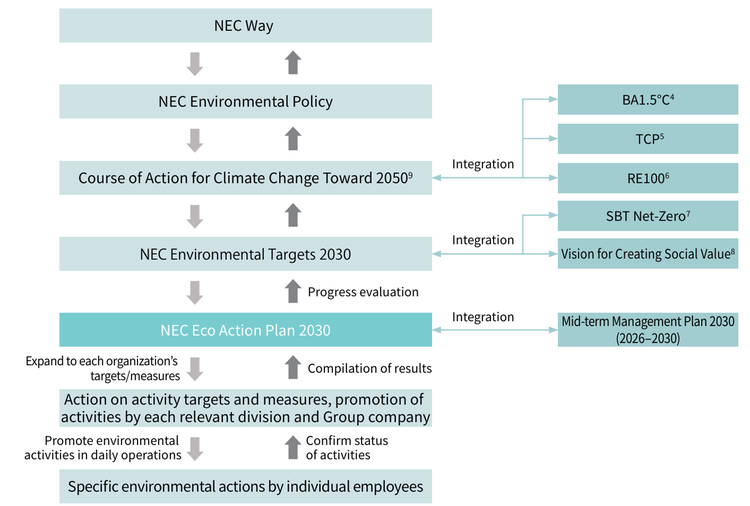
4. Business Ambition for 1.5°C
5. The Climate Pledge
6. An international initiative in which companies aim to use 100% renewable energy to produce the electricity used in their businesses
7. Science Based Targets. Greenhouse gas (GHG) emission reduction targets that align with the levels required by the Paris Agreement. NEC obtained approval for its SBT Net-Zero target in April 2024.
In May 2026, NEC updated its targets and received validation and approval again from the SBTi for the updated targets.
8. Newly formulated in line with the environment surrounding NEC and NEC's business as of the time of the announcement of the Mid-term Management Plan 2030, as five years had elapsed since the formulation of NEC 2030 VISION in May 2021
9. We have moved our target for achieving Net-Zero up to 2040 because we have joined The Climate Pledge. Accordingly, the contents of the Course of Action for Climate Change have been reinterpreted as the Action Guidelines on Climate Change toward 2040
Targets
Net Zero Emissions by 2040
In September 2022, The Company joined The Climate Pledge, a climate initiative co-founded by Amazon and Global Optimism, and declared its commitment to bring forward the timing of achieving Net-Zero (net zero greenhouse gas emissions) by 10 years, from 2050 to 2040.
Based on this commitment, The Company obtained approval for its Net-Zero target from the Science Based Targets initiative (SBTi) in April 2024. In May 2026, The Company updated its targets and received validation and approval again from the SBTi for the updated targets.
These targets are based on the SBTi Net-Zero Standard. From a FY2024 base year, The Company aims to reduce Scope 1, 2, and 3 greenhouse gas emissions by 63.6% by FY2034, and by more than 90% by FY2040. The Company aims to achieve Net-Zero by prioritizing deep emissions reductions and neutralizing only residual emissions that are extremely difficult to reduce, in line with SBTi criteria.
The Company is working to reduce CO2 emissions not only from its own business activities (Scope 1 and 2), but also across the entire supply chain, including Scope 3 emissions. Currently, Scope 3 emissions account for 96% of NEC Group's total greenhouse gas emissions, and The Company is promoting emissions reduction initiatives together with suppliers and customers.
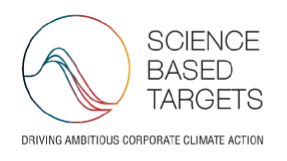
NEC Environmental Targets 2030
NEC Environmental Targets 2030 calls on the Company both to continuously reduce its own environmental footprint and risks and to increase its contributions through businesses with an eye on 2030. Further, NEC will increase environmental contributions through its businesses by providing value not only in the area of climate change countermeasures, which has been the focus of its initiatives, but also in relation to a broader range of environmental issues, including the realization of a circular economy, water and food safety, and protection of biodiversity.
To achieve this target, the NEC Group has developed a five-year action plan, backcast from 2030, as the "NEC Eco Action Plan 2030" and is advancing initiatives across the entire Group.
Note: In accordance with the SBTi Corporate Net-Zero Standard v1.3 and Corporate Near-Term Criteria v5.3, the organizational boundary was revised following the exclusion of Japan Aviation Electronics Industry, Limited from the scope of consolidation. As this change met the materiality threshold of 5% or more, the targets were recalculated and revalidated, and the base year was updated to fiscal 2024. The fiscal 2030 target—a 39% reduction from fiscal 2024 levels—is equivalent in ambition to the previous target of a 50% reduction from fiscal 2020 levels and does not represent any lowering of the Company's emissions reduction ambition.
Achievements
SBT
Fiscal 2025 Results
Regarding Scope 3 emissions in fiscal 2025, CO2 emissions decreased from the previous fiscal year, despite an increase in procurement costs of raw materials and other items due to business expansion and a change (slower) in the environmental function improvement cycle.
*1 Scope 3 coverage: 35% of Category 1, 100% of Category 3, 100% of Category 11
*2 Scope 3 figures for fiscal 2021 (2020 above) were revised due to an error in the figures disclosed for fiscal 2022. We will work to improve the accuracy of Scope 3 disclosures.
*3 Beginning with fiscal 2026 results, the base year will be changed to fiscal 2024.
Reduction Measures
*1 Scope 3 Category 1: CO2 emissions of purchased products and services
*2 Scope 3 Category 11: CO2 emissions of sold products
RE100*
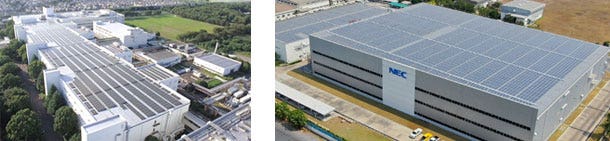
In May 2021, the Company joined RE100, which aims for a significant increase in the use of renewable energy globally. Aiming to use only renewable electricity, we are moving forward with activities based on a policy of installing solar power generation equipment on roofs wherever possible while procuring more green electricity. In fiscal year 2026, renewable energy was used to generate 40% of the electricity we consumed. We aim to increase this ratio to 100% by fiscal year 2041.
*RE100: This initiative is based on a partnership with the CDP and The Climate Group, an international NGO. It consists of companies that aim to derive 100% of the energy they use from renewable energy.
Renewable Energy Results
2021
Establishment of the NEC Eco Action Plan 2030
In developing the "NEC Eco Action Plan 2030," the NEC Group identified key environmental trends inside and outside the Company, as well as the results of climate scenario analyses, and organized their potential impacts on the NEC Group in terms of risks and opportunities. Based on this assessment, the Group identified the targets to be addressed. These targets were classified into three areas—Carbon Neutrality (CN), Circular Economy (CE), and Nature Positive (NP)—and specific targets were established for each area based on the respective basic policies. The targets were also systematically organized into priority action items and management items. The "NEC Eco Action Plan 2030" has been rolled out to relevant departments and Group companies, where it is translated into specific action targets that reflect the characteristics of each business. This approach is designed to ensure that the actions of each employee contribute to achieving the targets. Progress in these activities is reviewed through environmental management audits, and corrective measures are implemented as necessary to ensure steady implementation.
1.Priority Items: Environmental activities on which the NEC Group should focus company-wide in order to create value for society and customers
Scope 1 and 2
Scope 3
- Identification of significant nature risks15
- Creation of a supplier priority map
- Selection of companies targeted (also taking into account procurement countries and the need to visualize Tier N)
- Formulation of the survey plan
Scope 1 and 2
Scope 3
- 100% completion of supplier engagement
- Establishment of a continuous risk management process
2. Management Items: Items for which efforts are made to maintain or improve the activity level, or items that have already reached the target level and are addressed within ordinary environmental activities
- Set reduction targets
- Disclose results
CN: Carbon Neutrality
CE: Circular Economy
NP: Nature Positive
14. In accordance with the SBTi Corporate Net-Zero Standard v1.3 and Corporate Near-Term Criteria v5.3, the target was recalculated and revalidated, and the base year was updated to fiscal year 2025 because the change in the organizational boundary resulting from the exclusion of Japan Aviation Electronics Industry, Ltd. from the scope of consolidation met the materiality threshold (5% or more). The fiscal year 2031 target (39% reduction from fiscal year 2025) is equivalent to the previous target (50% reduction from fiscal year 2021) and does not represent a reduction in ambition.
15. Drought, flooding, biodiversity/pollution, resources
1. Progress Results of the NEC Eco Action Plan 2025
The NEC Group compiled environmental targets to be addressed over the five-year period from fiscal year 2022 through 2026 as the NEC Eco Action Plan 2025, deployed them to each business unit and Group company, and carried out activities.
As outlined below we determined priority initiatives from three perspectives: 1. Reduce own risks and environmental footprint 2. Increase contributions through businesses 3. Build foundations to promote environmental management.
For the five-year period from fiscal year 2027 through 2031, we will continue activities in accordance with the newly formulated NEC Eco Action Plan 2030.
1.1. Reduce Own Risks and Environmental Footprint
Reduce plastic waste output16
Reduction targets (compared with FY2020)
Reduce plastic waste output16
Information disclosure
1.2. Expanding Our Contribution Through Our Businesses
- Establish processes for each business unit and Group company to understand green revenue and manage results
- Set targets for FY2026
1.3. Build Foundations to Promote Environmental Management